





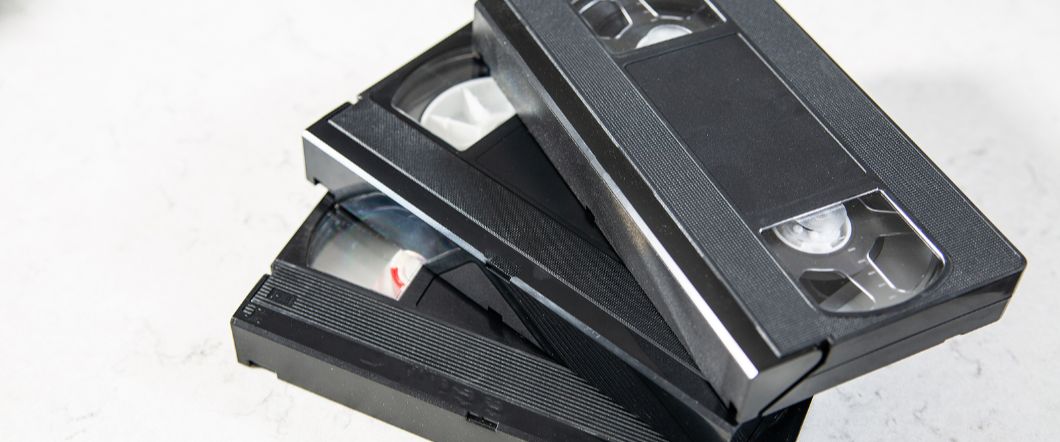
A damaged VHS tape does not automatically mean lost footage. Many tapes that appear broken, warped, or unplayable still contain recoverable video. The key is understanding the type of VHS tape damage involved and choosing the right restoration approach. With proper handling and the right equipment, professional videotape restoration can often preserve recordings that seem beyond saving during the video transfer process.
Common Types Of VHS Tape Damage
VHS tapes degrade in several ways over time. Physical wear, poor storage conditions, and mechanical failure all affect whether a transfer is possible. Common forms of damage include:
- Physical Tape Damage: Creases, crinkles, stretching, snapped tape, or tape pulled out of the cassette.
- Shell & Reel Damage: Cracked cassette, broken door, stuck reels, missing screws, misaligned hubs.
- Environmental Damage: Heat warping, moisture exposure, mold, smoke residue, and magnetic exposure.
- Playback Damage: Chewed tape from a faulty VCR, edge fraying, uneven tension from repeated rewinds.
Can VHS Tapes Be Restored Successfully?
The possibility of restoring VHS tapes depends on the nature and extent of the damage. While not all tapes can be fully recovered, many can be salvaged with professional help. Factors influencing success include:
- Level Of Damage: Minor warping or slight tears are often more reparable than severe crushing or burning.
- Environmental Factors: Tapes stored in stable conditions are more likely to be restorable.
- Professional Expertise: Skilled technicians can use specialized equipment to repair and digitize tapes.
How Tape Damage Affects Transfer Results
Damage does not affect every tape the same way. A tape with a cracked shell may still contain perfectly playable media once you move it into a stable housing. Tapes with creases or stretching may still play. These issues often cause tracking problems, audio distortion, or horizontal noise that require stabilization during capture. Your goal is not to “fix” the tape back to a new condition. Your goal is to extract the best possible signal one time, then preserve it as a digital file.
Signs Your Tape Still Has A Good Chance
Many damaged VHS tapes remain transferable when the magnetic tape itself stays mostly intact. These signs usually point to a higher chance of success:
- The Tape Looks Intact: No melting, heavy mold penetration, or large missing sections.
- The Damage Is Localized: A short tear, a small wrinkle, or a single splice point.
- The Shell Took The Hit: A broken VHS tape shell with tape that still sits flat on the reels.
- The Tape Has Not Been “Tested” Repeatedly: Multiple risky play attempts often create new damage.
What Happens With A Broken VHS Tape
A broken VHS tape often breaks in one of two places. The tape snaps, or it pulls free near the leader. In both cases, our technicians can usually reconnect the tape with accurate alignment and clean splicing materials. After that, we focus on safe playback conditions to avoid chewing or stretching during the transfer. If the cassette shell caused the issue, we may also rebuild the tape into a new shell to restore smooth reel movement before digitizing it.
What Mold, Water & Heat Damage Mean For VHS Restoration
Environmental exposure creates the toughest restoration cases. Mold, moisture, and heat can damage the tape surface, the binder, or the reels.
- Mold: Often recoverable in mild cases with controlled cleaning. Heavy mold can permanently etch the tape surface.
- Water Exposure: Sometimes recoverable if you dry and treat it correctly. Standing water and grime can cause deeper binder issues.
- Heat Warping: Warped shells are fixable. Warped tape media usually causes permanent playback instability.
- Smoke & Residue: Transfer remains possible, but residue can foul equipment and worsen signal noise without cleaning.
DIY VHS Restoration Techniques
While professional services are recommended for significant damage, minor issues can sometimes be addressed with DIY techniques. Home methods, however, carry the risk of further damage if not executed properly. Techniques include:
- Manual Splicing: Joining torn sections of tape with splicing tape and a cutter.
- Rewinding Tapes: Using a VHS rewinder to re-tension loose tape.
- Environment Control: Stabilizing the storage environment to prevent future damage.
Why Professional VHS Restoration Delivers Better Results
DIY attempts usually focus on basic handling. You might re-seat loose tape, gently rewind, or avoid storage conditions that accelerate damage. DIY work rarely addresses signal instability, tension problems, or fragile tape surfaces. If you try to splice without the right tools, you can misalign the tape path and create more damage during playback.
Professional VHS restoration follows a different workflow. Our technicians:
- Inspect the cassette and tape path.
- Correct tension and reel alignment issues.
- Repair or replace damaged cassette shells.
- Clean contamination without harming the tape surface.
- Digitize the footage using equipment built for unstable playback.
Equipment Makes Or Breaks A Transfer
Effective VHS restoration requires high-quality equipment to ensure successful VHS to dvd transfers. Professional-grade machinery offers capabilities far beyond what consumer-grade devices can achieve. Key equipment includes:
- Enhanced VCRs: Featuring features like time base correction for smoother playback.
- Digital Cleaning Tools: Removing dirt and debris that may affect video signals.
- Advanced Software: Capable of editing and enhancing audio and visual quality during digitization.
What To Do Before You Bring In A Damaged VHS
Small handling choices can improve your odds of a successful restoration. They also prevent the damage from spreading before transfer.
- Stop Playing It: Each attempt can worsen stretching and edge damage.
- Keep It Dry & Cool: Avoid heat, sunlight, garages, and damp storage.
- Do Not Pull Tape By Hand: Loose tape needs careful re-seating, not yanking.
- Separate Moldy Tapes: Store them away from clean tapes in sealed bags.
- Label What You Know: Note events, dates, and any playback issues you saw.
Protect Your Footage Before VHS Damage Worsens
Preserving your cherished videos is our top priority. At DVD Your Memories, our expert services offer peace of mind by ensuring the safe transfer of your memories from damaged VHS to digital formats. If you’re in Southern California and need assistance with VHS restoration, contact us today to learn more about our comprehensive media digitization services.